Partners
Udaan
Recognising the urgent need to address the mental health crisis among DNT women, the organisation combines psychosocial support with youth leadership development to empower the community and strengthen its engagement with state mechanisms.
The organisation’s founder, Prem Kumar Mahagu, belongs to the Nat nomadic community and has dedicated his life to advocating for the rights of DNT and Ghumantu communities. His extensive work in legal advocacy includes close coordination with local authorities and legal institutions to address systemic discrimination and structural exclusion. A member of the Bimukt Tribe, Ghumantu, and Ardha Ghumantu communities, Prem Kumar’s leadership reflects a deep commitment to advancing human rights, policy reform, and social inclusion.
Although the Criminal Tribes Act was repealed after independence, following the recommendations of the Iyengar Commission, many DNT communities continue to endure social stigma, criminalisation, and exclusion from basic rights and opportunities. Through Udaan Trust, Prem Kumar and his team strive to challenge these entrenched inequities, promote mental health and dignity, and build a future where DNT individuals can participate equally in social, economic, and political life.
Project with MHI
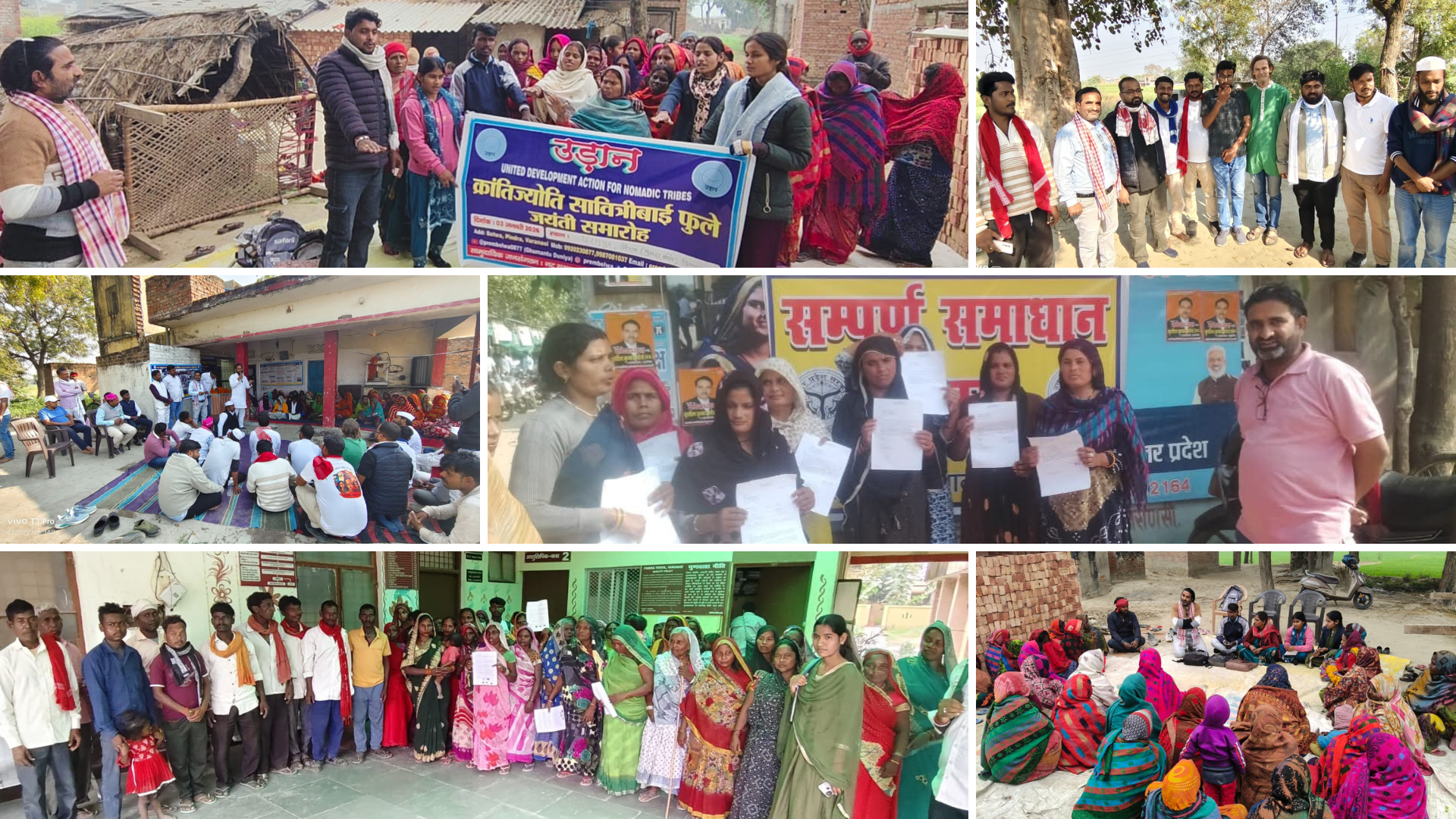
Beginning in December 2025, Udaan Trust will begin direct engagement with Nat and Musahar tolas across Pindra, Badagoan and Sevapuri blocks of Varanasi district, collaborating with community groups and trained youth volunteers to strengthen local leadership, inclusion, and resilience. The initiative integrates eight interlinked components to advance rights-based development and community empowerment.
Community centres will be established as accessible spaces for meetings, awareness, and service delivery, co-managed by Udaan, community groups, and volunteers. Through youth leadership development, regular training and mentoring will create a cadre skilled in RTI filing, constitutional literacy, and official communication, capable of mobilising community action. Community groups will advocate collectively at block, tehsil, and district levels, using petitions and dialogues to strengthen institutional accountability and systemic responsiveness.
Under access to government schemes, families will be supported in obtaining Aadhaar, ration cards, caste and birth certificates, and housing pattas, while ensuring inclusion in pensions and welfare schemes through follow-up. Livelihoods and economic stability will be promoted by linking families to MGNREGA, NRLM, skill-building programmes, and Hunar Haats, combining traditional skills with new income opportunities. Efforts on identity and dignity will celebrate DNT heritage through cultural events and public observances to build pride and visibility. Educational support will focus on enrolling out- of-school children, expanding access to scholarships, and offering after-school learning.
Health and Nutrition components will include PHC health camps, Ayushman Bharat and Janani Suraksha Yojana enrolment, and sessions on Nutrition, maternal health, and addiction prevention. Covering Nat, Musahar, Kanjar, Kol, and Dharkar communities, the programme aims to increase school enrolment, improve health access, enhance youth-led advocacy, and promote toilet construction under the Swachh Bharat Mission. Through continuous documentation and evidence-building, Udaan will strengthen policy engagement and sustain a community-led framework for social justice and empowerment.